Maine Coon
Maine Coons are large, slow-maturing cats — most do not reach full size until they are three to four years old, which surprises owners who expect a cat to be done growing by one year. That size has real practical implications: equipment that works for an average cat often does not fit or hold up for a Maine Coon. Litter boxes, carriers, climbing structures, and even food puzzles need to be sized appropriately. The long, layered coat requires scheduled brushing to stay mat-free, particularly around the chest, belly, and underarms. Maine Coons tend to be sociable and often want to be near family activity rather than alone in another room — that engagement is part of who they are, and owners who enjoy it tend to find the relationship genuinely rewarding.
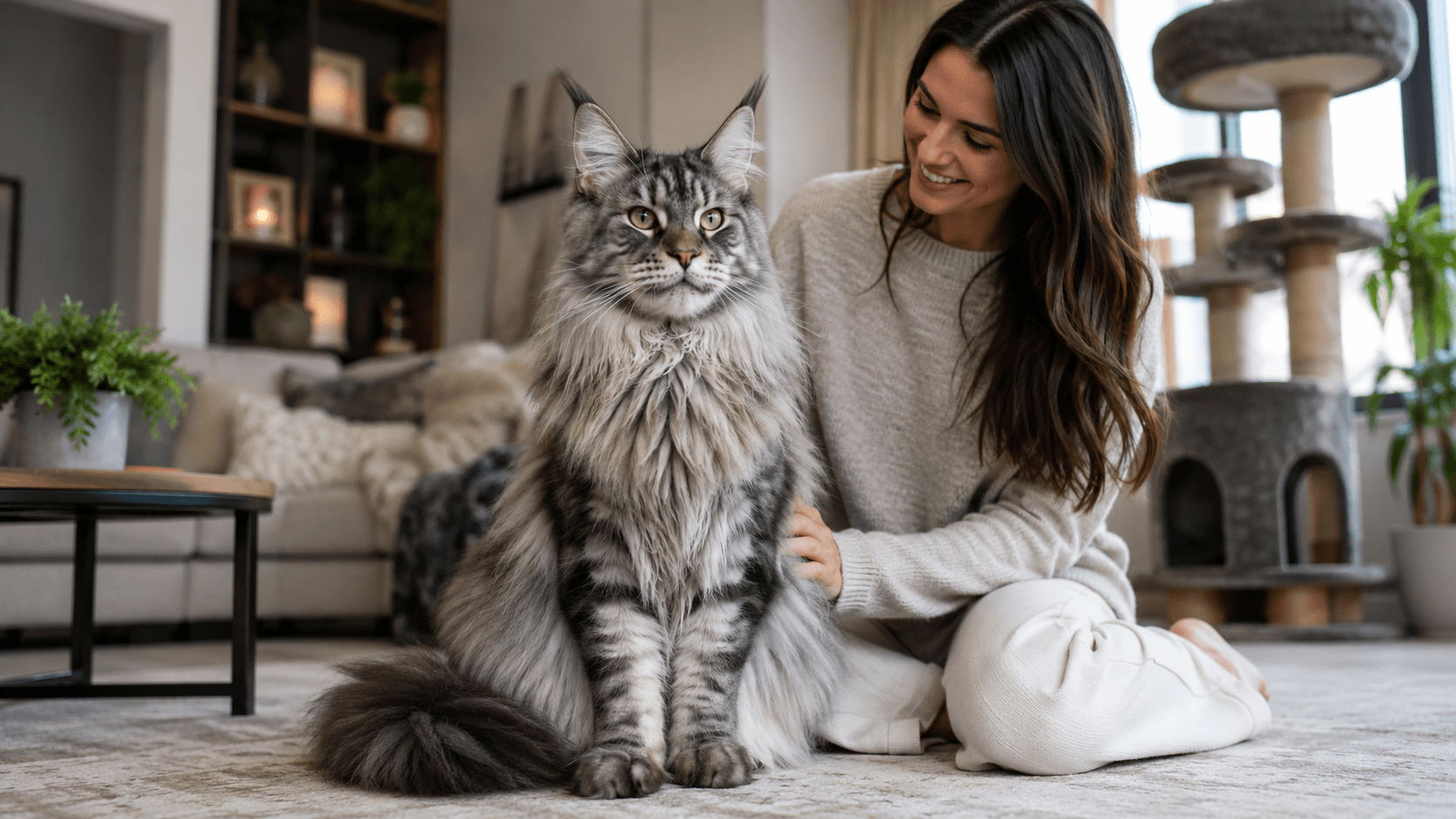
Who this guide is for
This guide is for Maine Coon owners and anyone considering the breed. Whether you have a new kitten or a senior companion, you will find practical, breed-specific care routines you can start using today.
Quick breed snapshot
Size
Large; slow maturing and often heavier than average domestic cats.
Energy level
Moderate to high; playful, social, and often interested in family activities.
Grooming level
Moderate to high; long coat needs scheduled brushing to prevent mats.
Best fit
Great for families that can provide space, brushing, enrichment, and regular care routines.
Main care focus
growth tracking, joint-friendly play, coat care, heart-health awareness, and hydration
Most common owner questions
When do Maine Coons reach full size?+
My Maine Coon is large but still gaining weight — should I worry?+
Can PetMyDear diagnose my Maine Coon?+
What should I track regularly for a Maine Coon?+
What to track in PetMyDear
Explore Maine Coon care topics
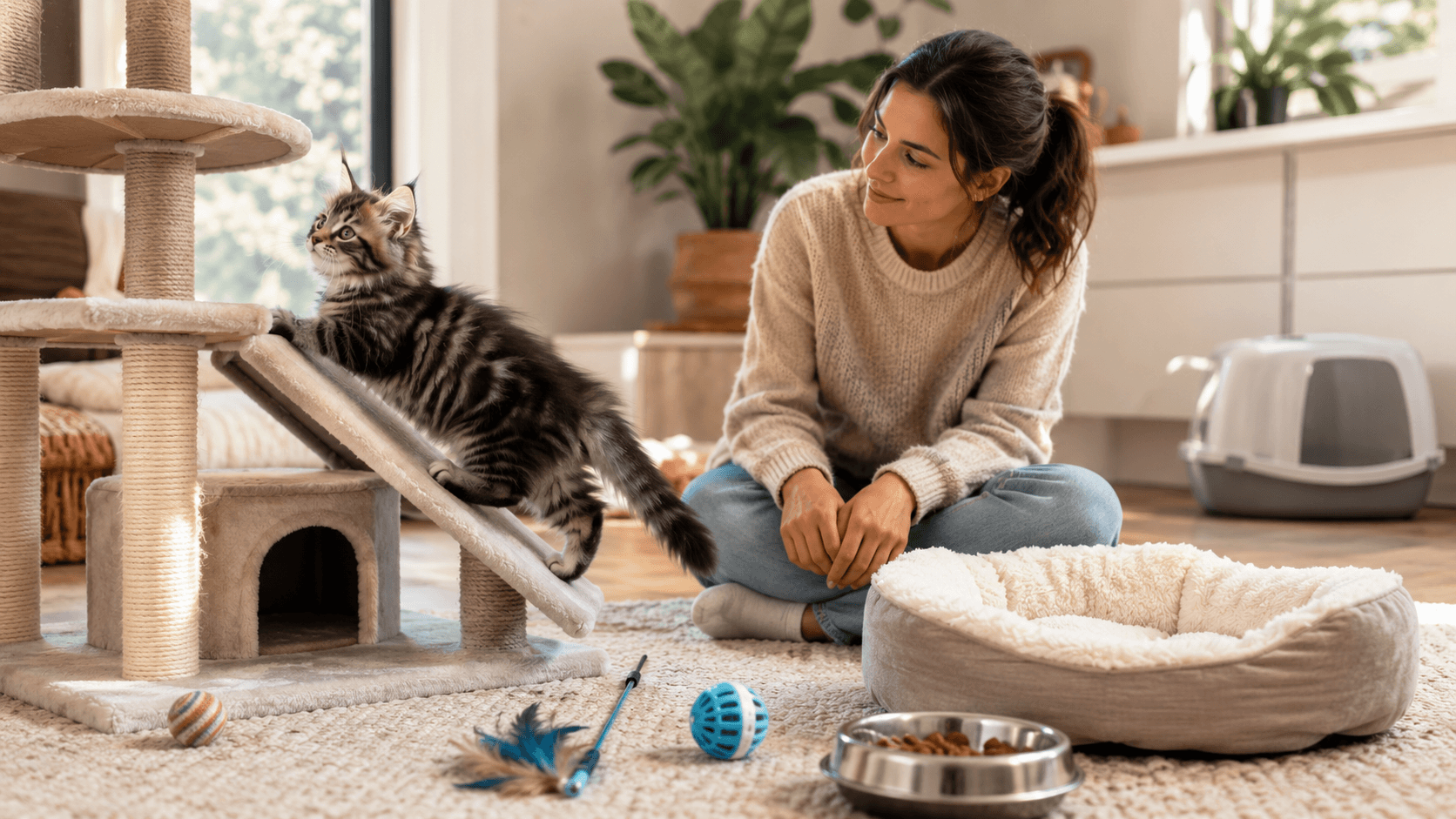
Kitten Care Guide
First weeks essentials — safe home setup, feeding and growth, litter training, socialization, and vet reminders.

Feeding Guide
Meal routines, portion control, hydration, weight monitoring, and foods to avoid — tracked in PetMyDear.
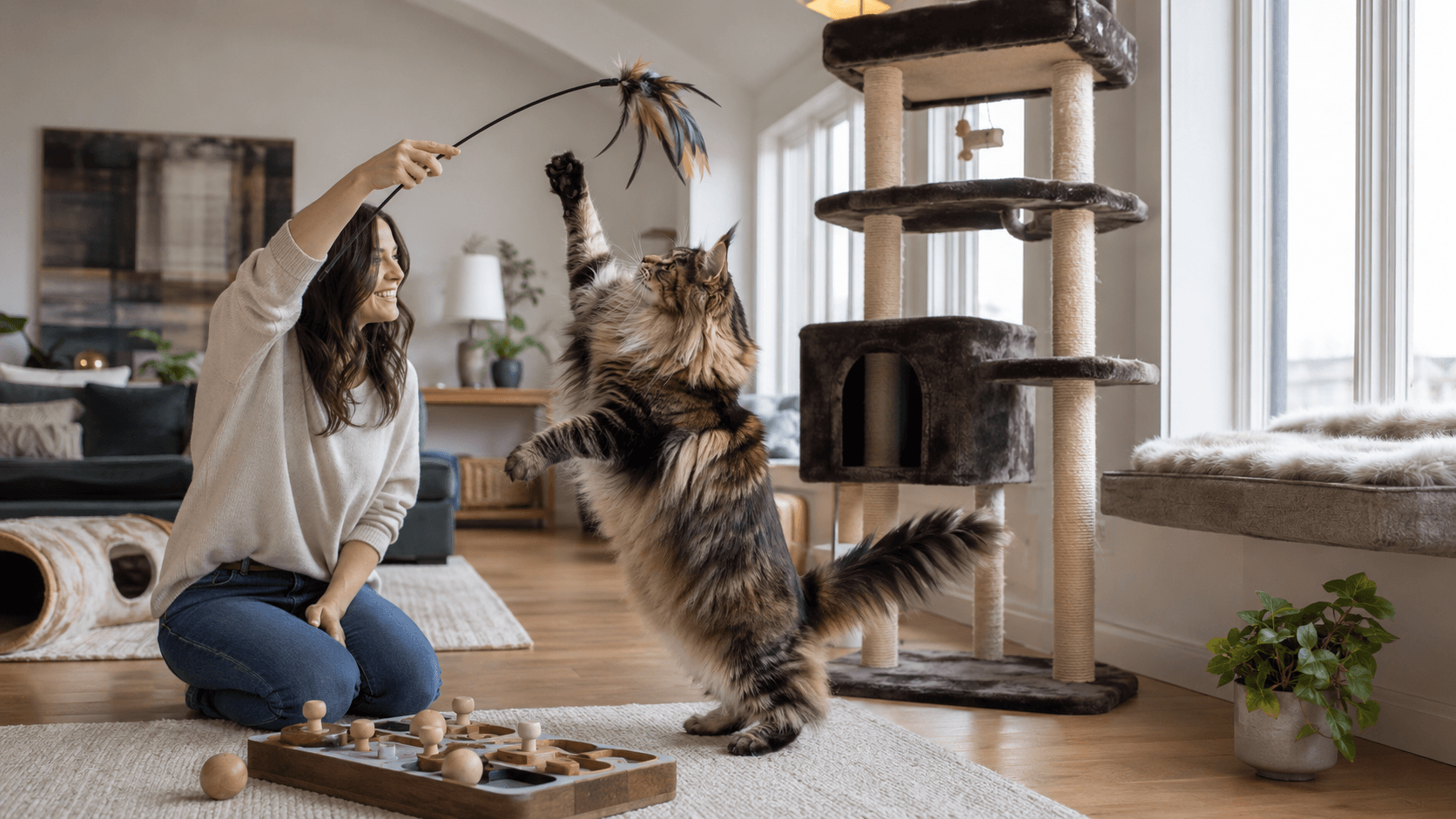
Behavior & Enrichment Guide
Play, scratching, climbing, vocalization, and enrichment routines that keep indoor cats happy and settled.
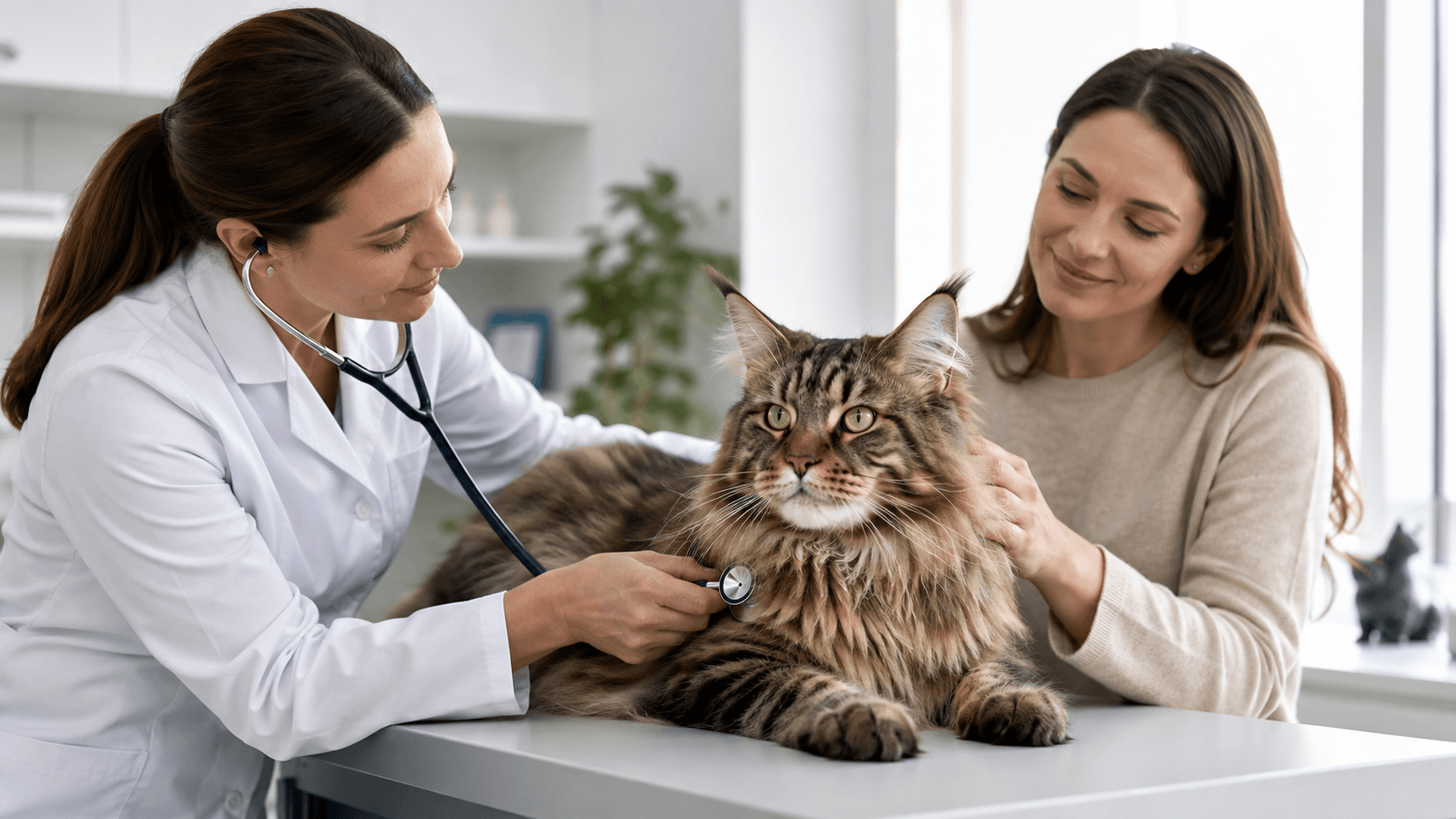
Health Care Guide
Preventive care, signs worth tracking, vet reminders, and care records — educational, not a diagnosis.
Grooming & Litter Care Guide
Brushing, nail, dental, eye and ear care, plus litter-box setup and hygiene routines.
Download PetMyDear for Android
Track routines, set reminders, and keep your Maine Coon's care history organized in one place.
Turn care routines into lasting habits
Set reminders, build daily checklists, and track feeding, grooming, and exercise in one calm place.