Maine Coon Feeding Guide
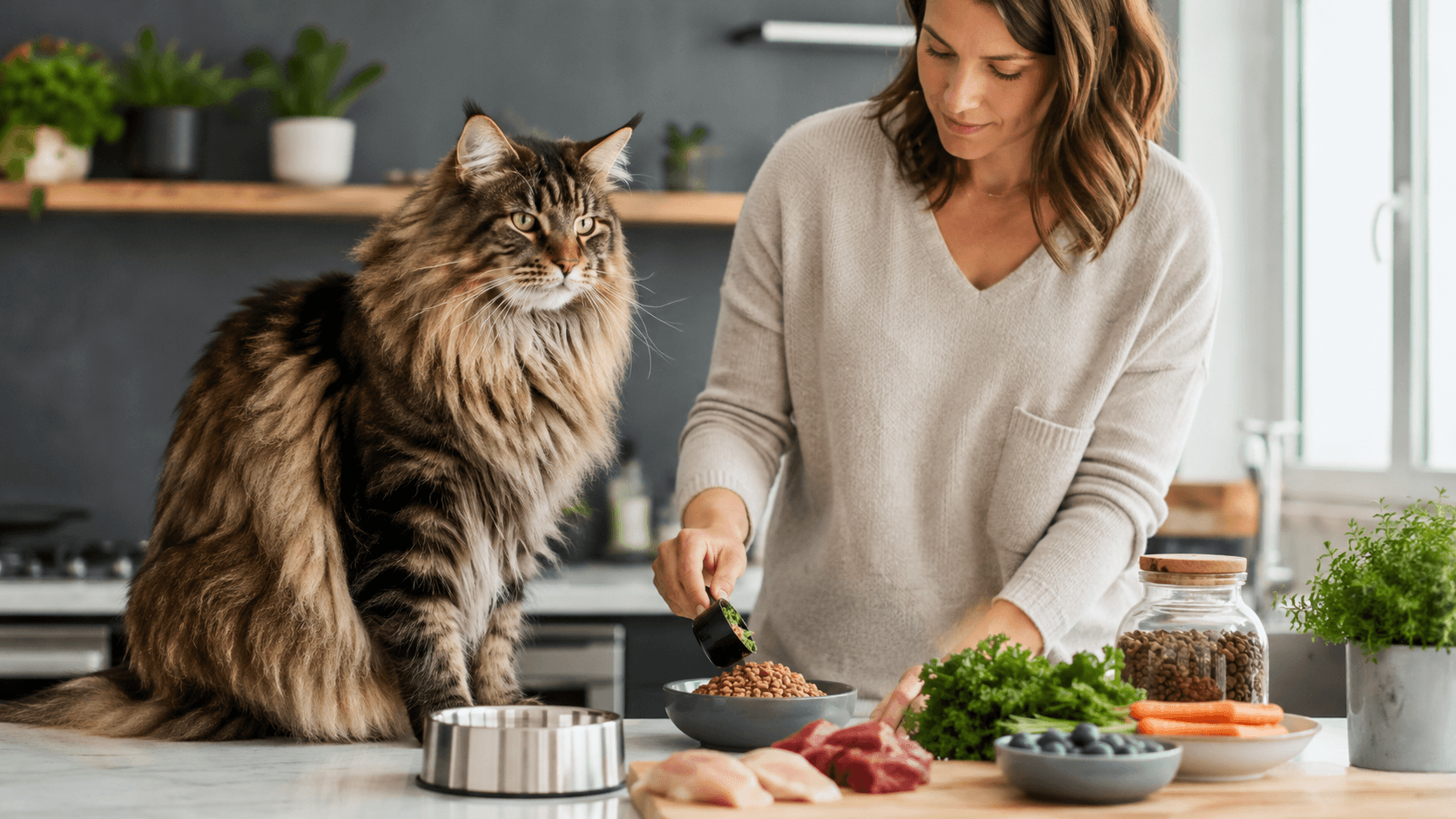
Feeding a Maine Coon through kittenhood and into adulthood involves a transition that is easy to miss: the caloric needs during active growth are higher than in a fully mature adult, but many owners continue feeding the same quantities even as the cat slows down and fills out. Because the frame is naturally large, it can be hard to tell the difference between healthy weight and excess weight without paying attention to body condition rather than just size. Measured meals, regular weight checks, and a body condition assessment from your veterinarian give you much more reliable information than visual size alone. Hydration is also worth supporting actively — a cat that drinks more tends to have better urinary health over the long term.
Maine Coon at a glance
Personality
large, social, playful, dog-like
Size
Large; slow maturing and often heavier than average domestic cats.
Energy
Moderate to high; playful, social, and often interested in family activities.
Grooming
Moderate to high; long coat needs scheduled brushing to prevent mats.
Best fit: Great for families that can provide space, brushing, enrichment, and regular care routines.
Feeding approach for Maine Coon
The primary focus for a Maine Coon is large-breed portion planning, lean body condition, and hydration support. Use the food label as a starting point and confirm portions with your veterinarian. Track meals, food brands, weight, and water habits in PetMyDear to spot patterns over time.
Life-stage feeding
Kitten
Age-appropriate kitten food, frequent measured meals, growth monitoring
Adult
Measured meals, lean body condition, hydration and weight tracking
Senior
Vet-guided adjustments, appetite and water monitoring, gentle changes
Hydration, weight & habits to avoid
Make water intake visible with multiple stations or a fountain, and watch litter-box volume and frequency as hydration signals. Do not feed onions, garlic, chocolate, grapes, or other foods unsafe for cats, and never rely on dog food. Avoid sudden diet changes unless directed by a veterinarian, and do not ignore appetite loss, repeated vomiting, diarrhea, or sudden thirst changes. Log observations in PetMyDear.
Track it in PetMyDear
The everyday care focus for a Maine Coon is growth tracking, joint-friendly play, coat care, heart-health awareness, and hydration. Set reminders, log routines, and build a care history you can share with your vet — all in one calm place.
Get the appFrequently asked questions
How do I know if my Maine Coon is overweight or just large?+
When should I switch my Maine Coon from kitten food to adult food?+
Does a Maine Coon need more water than other cats?+
Can I track my Maine Coon's weight and feeding in PetMyDear?+
More Maine Coon guides
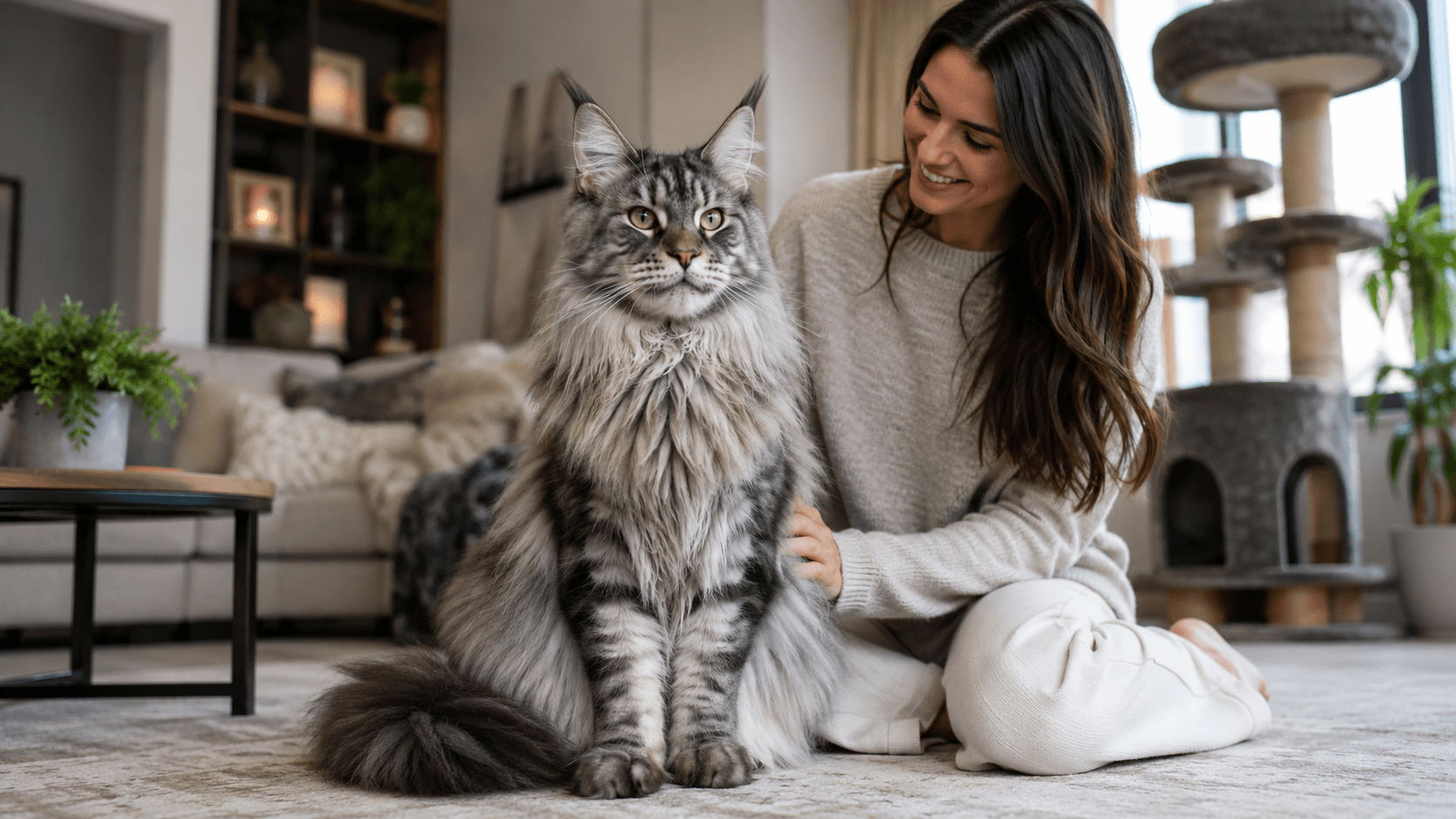
Maine Coon Overview
Complete breed guide with quick snapshot, care priorities, and everything you need to get started.
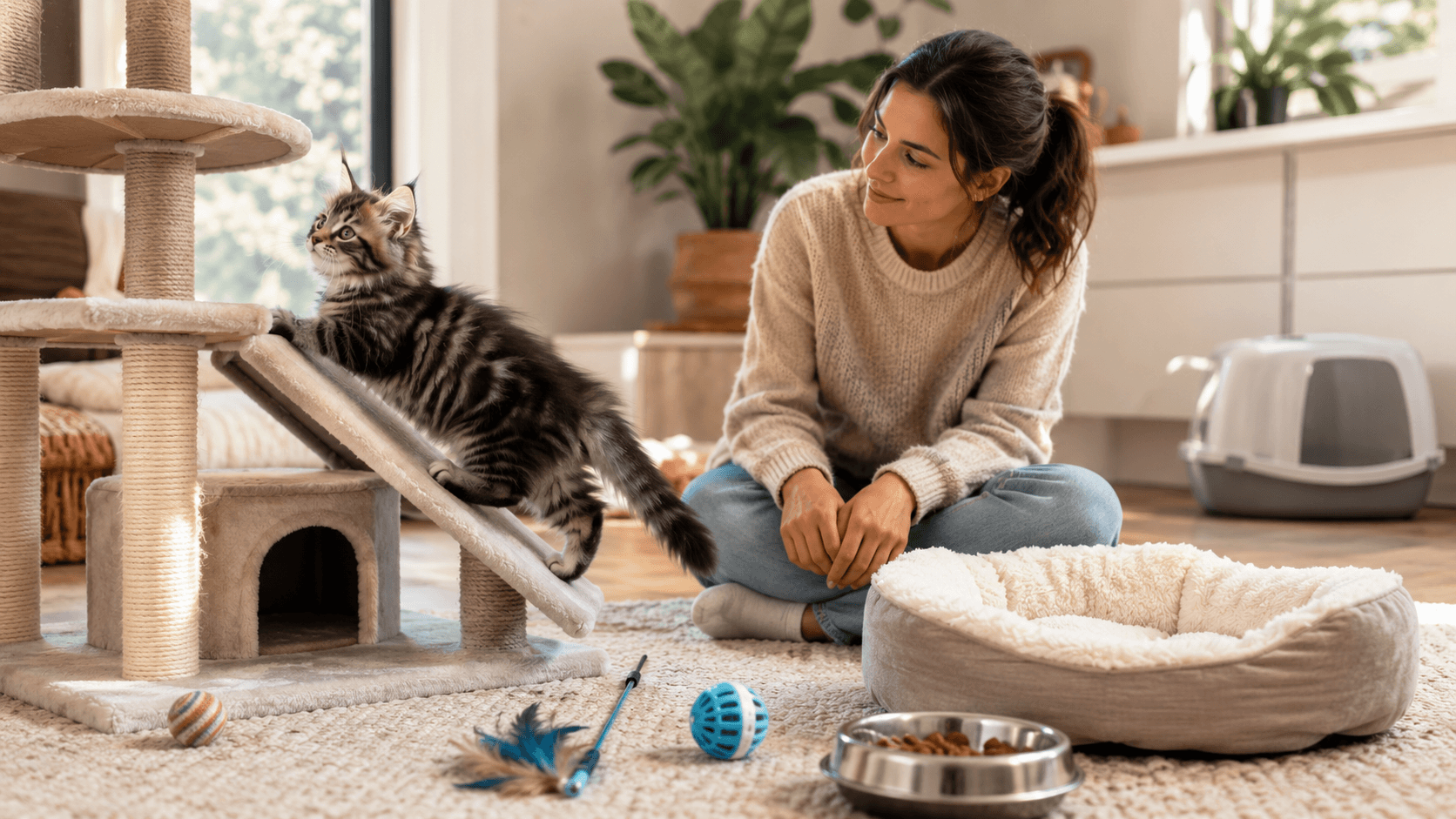
Kitten Care Guide
First weeks essentials — safe home setup, feeding and growth, litter training, socialization, and vet reminders.
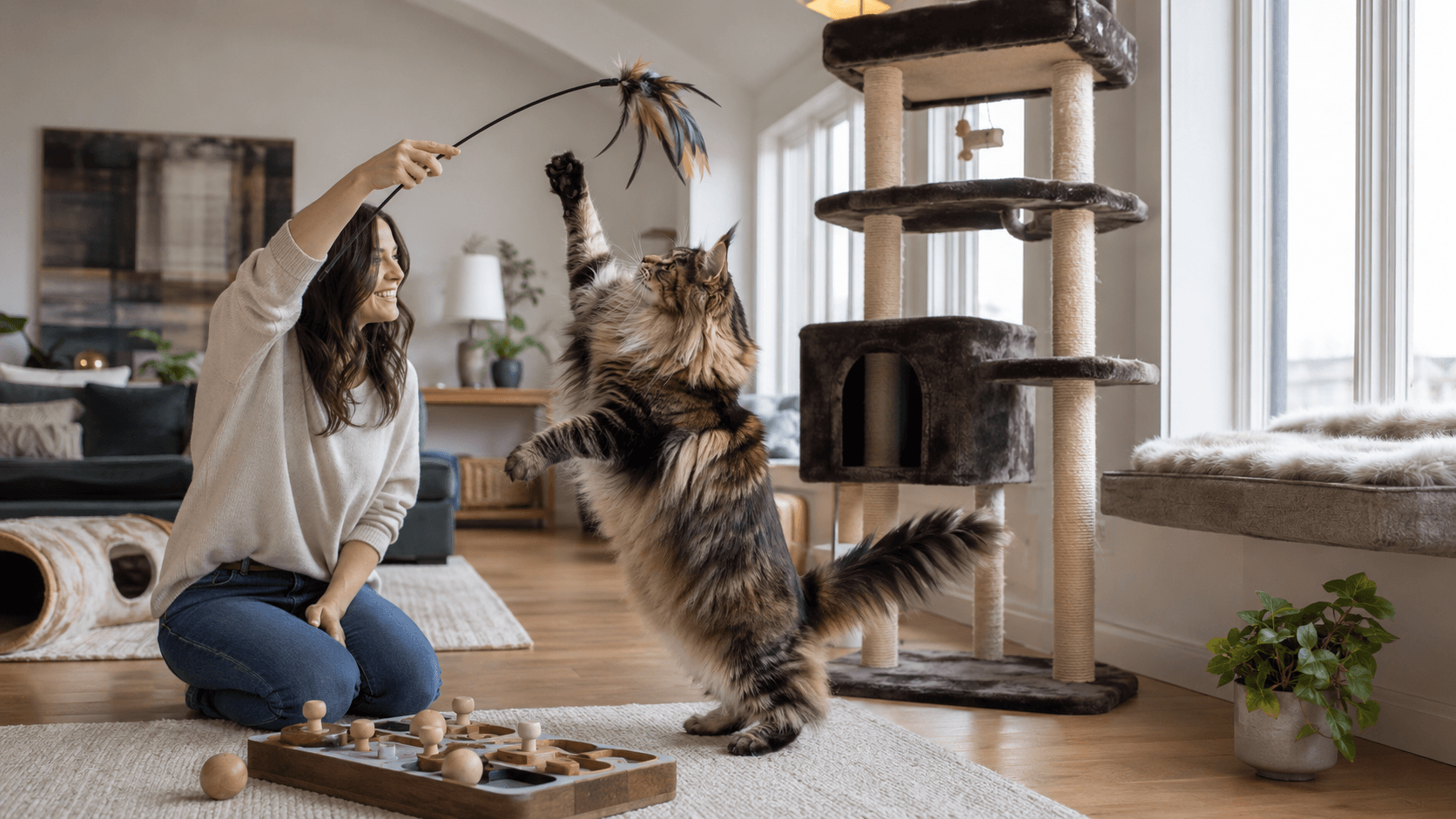
Behavior & Enrichment Guide
Play, scratching, climbing, vocalization, and enrichment routines that keep indoor cats happy and settled.
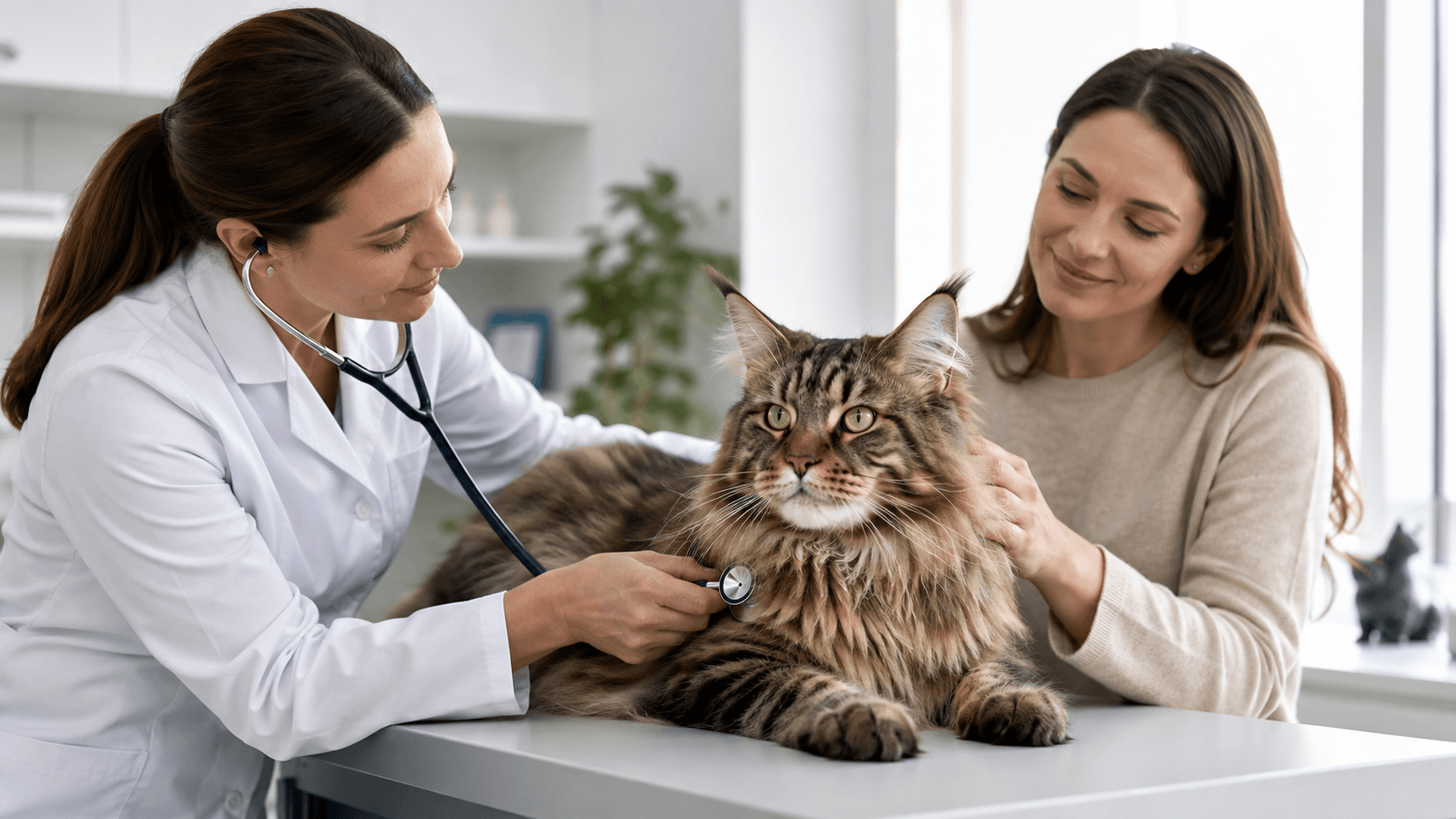
Health Care Guide
Preventive care, signs worth tracking, vet reminders, and care records — educational, not a diagnosis.
Grooming & Litter Care Guide
Brushing, nail, dental, eye and ear care, plus litter-box setup and hygiene routines.
Download PetMyDear for Android
Track routines, set reminders, and keep your Maine Coon's care history organized in one place.
Turn care routines into lasting habits
Set reminders, build daily checklists, and track feeding, grooming, and exercise in one calm place.